
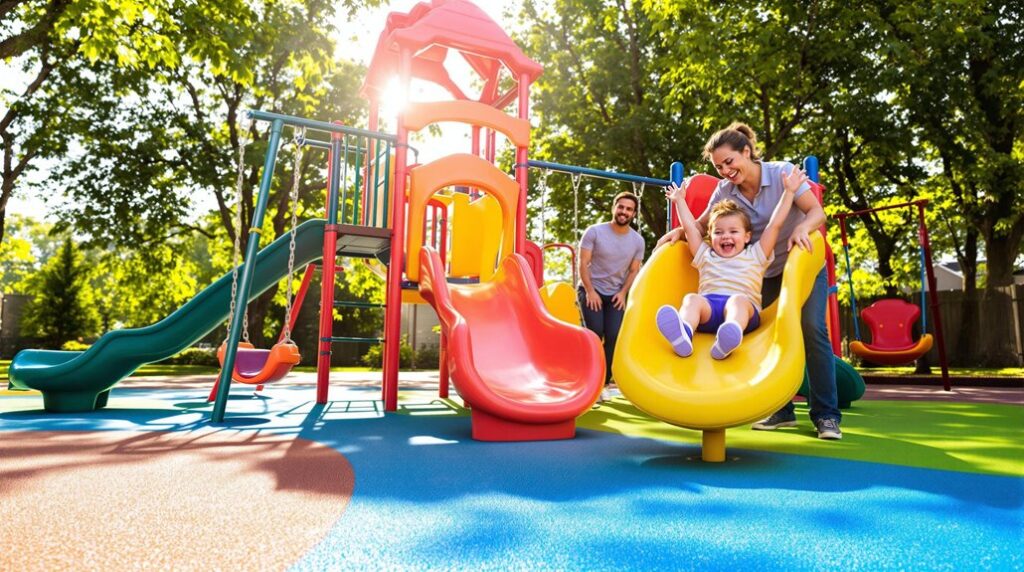
Safe playground equipment is essential for minimizing injury risks while ensuring enjoyable play experiences for children. Important safety features include soft landing materials and the elimination of sharp edges. Compliance with CPSC and ASTM standards guarantees that equipment design meets safety guidelines. Regular maintenance checks, supervision, and clear signage are critical for keeping play areas secure and accessible. By understanding these factors, you can enhance children’s safety in play environments, while further insights await.
Importance of Safety Features in Playground Equipment
When considering playground safety, it is important to recognize the significance of incorporating effective safety features into equipment design. Ensuring that playground surfaces minimize injury risks from falls is essential, as these incidents account for the majority of playground injuries. Utilizing materials like engineered wood fiber and loose-fill rubber provides effective shock absorption, with a recommended minimum depth of 12 inches. Additionally, preventing sharp edges and protrusions is critical; equipment must be free of hazards that could lead to lacerations. Implementing guardrails on elevated platforms and ensuring age-appropriate designs enhance safety further. Regular maintenance and inspections are necessary to detect potential hazards, fostering a safer environment for children to play and explore while reducing the risk of injury. Moreover, incorporating thermoplastic playground markings can also enhance safety by defining play zones and encouraging organized play.
Types of Playground Equipment and Safety Considerations
Playground equipment comes in various forms, each designed to cater to different play experiences and developmental needs. Swings, including tire and net versions, provide both classic and unique play options. Slides—such as straight, spiral, and wavy—offer diverse thrills, while climbing structures challenge kids and build strength. Balance features enhance coordination, and rotating equipment like merry-go-rounds allows dynamic play.
Safety considerations are essential. Proper installation of swings and climbing equipment minimizes accident risks. Soft landing materials, like rubber mulch, cushion falls. Regular maintenance checks guarantee equipment remains safe and functional. Additionally, age-specific designs, including bucket swings for toddlers, enhance safety. Clear signage communicates usage guidelines and height restrictions, guaranteeing children engage with equipment appropriate for their developmental stage. Furthermore, incorporating durable playground markings can create structured environments that promote safe and engaging play.
Materials Used in Safe Playground Design
While safety is a top priority in playground design, the choice of materials plays an important role in guaranteeing that equipment is both functional and secure. Durable metals provide robust structural support, while versatile plastics are ideal for slides and interactive features. Wood offers a natural aesthetic, contributing to the playground’s overall appeal. Rubber surfaces enhance safety by cushioning falls, making them necessary for flooring and mats. Additionally, hybrid materials combine strengths of various substances to improve durability. For effective shock absorption, consider options like engineered wood fiber and poured-in-place rubber, which also promote low maintenance. Ultimately, selecting the right materials is essential for creating a safe, enjoyable environment for all users. Moreover, incorporating durable thermoplastic materials can significantly enhance the longevity and resilience of playground markings against heavy use.
Regulations and Standards for Playground Safety
Creating a safe playground environment involves more than just selecting the right materials; understanding the regulations and standards governing playground safety is equally important. The U.S. Consumer Product Safety Commission (CPSC) provides essential guidelines for public playgrounds, while some states require compliance with the CPSC handbook or ASTM standards. ASTM F1487 outlines specifications for equipment designed for children aged 2-12, guaranteeing safety in design and installation. Additionally, ASTM F1292 focuses on impact attenuation of surfacing materials, which can greatly reduce head injuries. Compliance with these regulations helps minimize injuries and guarantees a secure environment for children. Regular inspections and maintenance are fundamental to uphold these standards, fostering a safe play experience that meets legal and safety requirements.
Effective Playground Layout for Supervision and Accessibility
An effective layout for playgrounds not only enhances the play experience but also guarantees adequate supervision and accessibility for all users. Placing benches with backs and armrests in shaded areas allows caregivers to supervise children comfortably. Clear signage directs users to essential amenities like water fountains and restrooms, while site visibility assures the playground remains open and inviting. Accessible routes, wide enough for all users, facilitate movement throughout the space. Incorporating sensory elements and contrasting colors helps those with visual impairments navigate safely. Additionally, creating distinct play zones and quiet areas supports diverse needs, enhancing both play opportunities and sensory regulation. By prioritizing these design principles, you create a safer, more inclusive environment for everyone. Moreover, utilizing high-quality thermoplastic for playground markings enhances safety and durability, ensuring longevity in the playground design.
Impact Zones and Shock-Absorbing Surfaces
When evaluating playground safety, understanding impact zones and the importance of shock-absorbing surfaces is fundamental. The minimum impact area for movable equipment, typically 1500mm, is essential for safety. Equipment like swings and carousels must have non-overlapping impact areas to prevent accidents. For platforms between 600mm and 1500mm high, a standard 1500mm impact area applies. Surfaces should comply with standards like F1292, guaranteeing they can absorb falls. Proper material selection is imperative, extending at least 6 feet beyond equipment perimeters. Regular maintenance of these surfaces is necessary to guarantee their effectiveness over time. Identifying impact areas during playground design helps prevent collisions, making informed choices critical for creating a safe play environment.
Innovations in Playground Safety Technology
As playground safety technology evolves, innovative approaches are reshaping how we guarantee a secure play environment for children. Smart equipment now integrates sensors that monitor usage and detect potential hazards, considerably enhancing safety. Inclusive design principles guarantee that playgrounds are accessible to all children, featuring wheelchair ramps and sensory play areas. Sustainable materials are gaining traction, reducing environmental impact while guaranteeing durability. Additionally, interactive play options, like augmented reality, not only foster creativity but also promote mental health benefits. Sensor technology provides real-time alerts to caregivers regarding safety issues, while AI safety systems analyze data to predict risks. These advancements collectively create safer, more engaging playgrounds, guaranteeing children can play freely and securely. Moreover, companies like Project Playgrounds are dedicated to providing high-quality thermoplastic playground markings that enhance the safety and aesthetics of play areas.
Maintenance Practices for Safe Play Areas
Regular maintenance practices are essential for ensuring the safety and longevity of playground equipment. Implement routine inspections monthly or quarterly based on usage intensity, prioritizing the cleaning of high-touch surfaces. Lubricate hinges and chains according to equipment guidelines, while monitoring surfacing materials for erosion or displacement. During structural integrity checks, examine bolts and connectors for looseness, ensuring ground anchors are secure to prevent tipping. Maintain surface safety by raking loose-fill materials weekly and repairing any sunken areas immediately. It’s crucial to document all repairs and inspections, adhering to ASTM and CPSC guidelines. By stocking spare parts and applying weather-resistant coatings, you can expedite repairs and deter rust, ultimately enhancing safety for all users. Additionally, incorporating playground markings can help define play areas and promote organized activities, further improving safety and engagement.
Community Involvement in Playground Safety Design
Community involvement in playground safety design is essential for creating environments that meet the needs and expectations of users. By conducting surveys and public meetings, communities can identify safety priorities and analyze local injury reports to inform design decisions. Collaborating with certified playground safety inspectors guarantees that the equipment meets established safety standards. Design workshops with parents, educators, and children facilitate inclusive planning, while advisory committees can help shape accessible features for diverse physical abilities. Hosting safety demonstration days and volunteer programs promotes awareness and active participation. Implementing child-led safety audits and organizing drawing contests empowers youth to express their safety concerns. By establishing feedback protocols, communities can guarantee ongoing evaluation and improvement of playground safety over time.
Trends in Eco-Friendly Playground Equipment
While the demand for playgrounds that prioritize safety and fun remains constant, a significant shift towards eco-friendly playground equipment has emerged in recent years. Many modern playgrounds now utilize materials like recycled HDPE, which can include post-consumer waste such as milk jugs, ensuring sustainability. In addition, structures are constructed from durable, FSC-certified hardwoods, minimizing the need for chemical preservatives. Design trends emphasize colorful aesthetics while integrating natural elements, enhancing the outdoor experience. Eco-friendly playgrounds also focus on longevity and low maintenance, reducing environmental impact. Importantly, these innovations can cut carbon emissions by approximately 50%, supporting a more sustainable future. By prioritizing durable and environmentally responsible materials, you can help create safer, greener play spaces for children.