
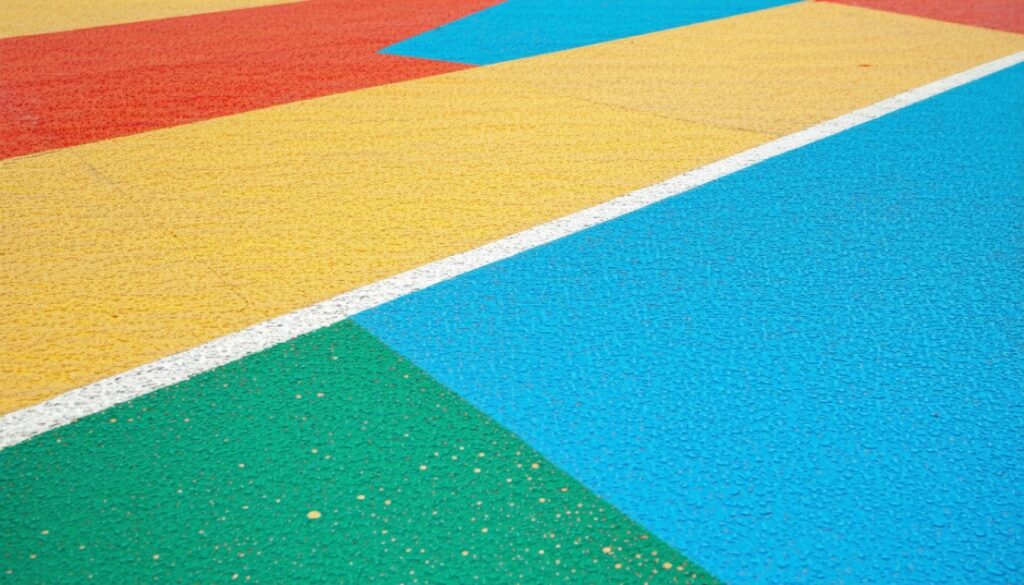
Nearly 1,500 primary and secondary schools across the UK and Europe trust anti-slip thermoplastic safety coatings to create vibrant, slip-resistant playgrounds. These thermoplastic markings fuse to tarmac or concrete at high heat, forming a micro-textured surface that stays grippy whether it’s wet or dry. By digging into the science behind these coatings, you’ll learn how they boost safety, withstand heavy use, and open up creative, educational design possibilities.
Understanding the science behind these coatings will help you plan a safer, longer-lasting playground.
Understanding thermoplastic coatings
Thermoplastic safety coatings consist of a resin-based polymer mixed with mineral fillers (often quartz or ceramic grit) that form a roughened texture. When heated to around 200 °C, the material melts, bonds to the substrate, and rehardens into a durable layer. Key properties include:
- High coefficient of friction, reducing slip risk in all weather
- Seamless fusion with tarmac or concrete, preventing peeling
- Custom colour and shape options for bespoke layouts
Good news, these coatings require only basic upkeep—sweeping and occasional touch-ups will keep them looking fresh. For step-by-step application tips, see our thermoplastic marking installation guide.
Enhancing playground safety
Slips and falls are a leading cause of playground incidents, especially when surfaces get damp. Anti-slip thermoplastic safety coatings increase traction and help you meet playground safety regulations uk standards. Reviews often highlight kids’ boosted confidence and engagement once walkways and game areas feel more secure.
Comparing thermoplastic and paint
| Feature | Thermoplastic coatings | Painted lines |
|---|---|---|
| Slip resistance | Consistently high traction, even when wet | Varies greatly, drops when damp |
| Durability | Up to 10 years guarantee (surface dependent) | Typically 1–2 years before repaint |
| Maintenance | Simple sweeping and minor retouches | Frequent repainting required |
| Colour retention | Fade-resistant pigments | Prone to chipping and fading |
| Surface bonding | Heat-fused to substrate | Adheres on top of surface |
For a deeper side-by-side look, check thermoplastic vs painted playground lines.
Ensuring durability and compliance
Project Playgrounds backs all thermoplastic markings with up to a 10-year guarantee, subject to surface condition. Durable pigments resist UV fade and heavy foot traffic, keeping designs crisp. You’ll find that:
- Regular inspections catch chips or wear early
- Mild detergents clear grime without harming the coating
- Reapplication focuses only on high-traffic areas
If you’re curious about lifespan factors, our guide on thermoplastic lifespan uk explains how substrate prep, climate, and usage affect longevity.
Creating engaging learning spaces
Beyond safety, thermoplastic coatings let you turn play areas into dynamic learning zones. You can map out:
- Number grids for counting games
- Alphabet trails for phonics practice
- Themed obstacle courses that support motor skills
Bespoke designs spark curiosity and movement (and reduce crowding) by clearly defining play zones. Explore our thermoplastic playground marking ideas for inspiration you can adapt to your school’s needs.
Quick recap and next step
- Learn how resin-filler mixtures create slip-resistant textures.
- Compare thermoplastic coatings with traditional paint.
- Plan for up to 10 years of low-maintenance durability.
- Add educational games and bespoke art to boost engagement.
You’re just one conversation away from transforming your playground. Project Playgrounds has installed these surface markings in over 1,500 schools and offers a decade-long guarantee on anti-slip thermoplastic safety coatings—reach out to see how they can help your next project.