
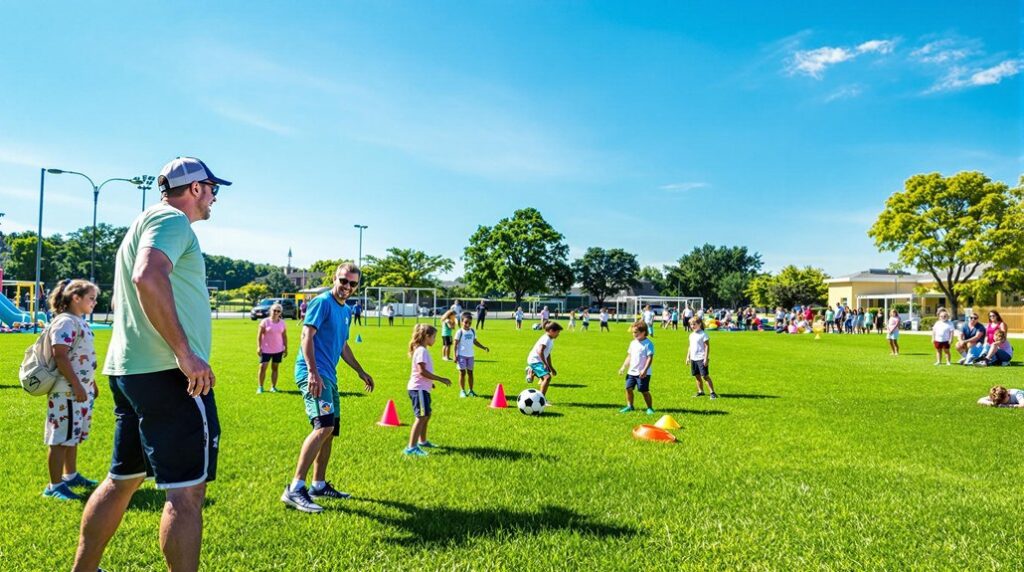
To effectively spend the sport premium, focus on several key areas. Invest in professional development for staff to enhance teaching quality, ensuring they’re equipped with current best practices. Purchase versatile sports equipment that promotes engagement and inclusivity, especially for students with special educational needs. Develop inclusive extracurricular programs and allocate funds for top-up swimming lessons to meet national standards. Incorporating after-school clubs fosters active lifestyles, and monitoring their impact can drive future decisions. Uncover additional strategies that can maximize your investment.
Investing in Professional Development for Staff
Investing in professional development for staff is essential because it directly enhances the quality of physical education (PE) delivered in schools. When you allocate part of the PE & Sport Premium funding for targeted CPD workshops, you’re equipping teachers with the latest strategies and methods. This not only boosts their confidence and knowledge but also leads to improved student engagement and outcomes. Continuous training keeps staff updated on best practices, resulting in a dynamic curriculum that addresses diverse student needs. Collaborating with external experts provides access to specialized resources, enriching your PE program. Evaluating the impact of these professional development initiatives is vital for justifying investments and ensuring long-term benefits for your school’s physical education provision. Additionally, incorporating durable playground markings into the curriculum can enhance outdoor learning experiences and promote active play among students.
Purchasing Versatile Sports Equipment
High-quality, versatile sports equipment plays an essential role in enriching the physical education experience for students. By investing in adaptable equipment, such as portable goals or multi-sport balls, you can cater to a wider variety of sports and activities, enhancing student engagement and participation. Prioritizing durability and ease of use guarantees that resources remain sustainable for future students. Additionally, involving staff in the decision-making process boosts their confidence and skills in delivering a diverse PE curriculum, which ultimately benefits student learning outcomes. It’s also vital to select equipment that supports inclusive sports activities, allowing all students, including those with special educational needs and disabilities (SEND), to participate fully in PE and sport programs, fostering an inclusive environment. Furthermore, incorporating thermoplastic playground markings can create defined play zones that encourage active engagement and support structured outdoor activities.
Developing Inclusive Extracurricular Programs
When schools prioritize the development of inclusive extracurricular programs, they create essential opportunities for all students, including those with special educational needs and disabilities (SEND), to engage in sports and physical activities tailored to their unique abilities. Investing in adaptive equipment and training staff guarantees that every child can participate meaningfully, fostering a culture of inclusivity. By offering diverse activities like wheelchair basketball or inclusive dance, you cater to various interests and abilities, increasing overall participation. Collaborating with local sports organizations enhances resources and expertise, making programs more structured and accessible. Additionally, regularly gathering feedback from participants allows you to assess the effectiveness of these programs and make necessary adjustments, guaranteeing that all pupils’ needs are met effectively.
Allocating Funds for Top-Up Swimming Lessons
Allocating funds for top-up swimming lessons is essential for guaranteeing that all pupils meet national curriculum requirements for swimming and water safety by the end of Year 6. Schools can utilize the PE & Sport Premium funding to provide these additional lessons, greatly increasing the percentage of pupils who can swim at least 25 meters unaided. By investing in water confidence sessions for younger pupils, schools help develop essential skills before formal swimming lessons begin. Partnering with local swimming instructors or facilities guarantees high-quality instruction, maximizing funding effectiveness. Additionally, regular assessments of pupils’ swimming abilities before and after top-up lessons yield valuable data, demonstrating the impact of funding and guiding future swimming provision decisions.
Promoting Active Lifestyles Through After-School Clubs
After confirming that students meet the national curriculum requirements for swimming, schools can further enhance student well-being by promoting active lifestyles through after-school clubs. These clubs offer essential opportunities for pupils to engage in physical activities beyond the standard curriculum, helping meet the government’s minimum requirement of two hours of PE per week. By utilizing PE and Sport Premium funding, schools can introduce diverse clubs catering to various interests, thereby increasing overall participation. Research indicates that regular physical activity contributes to improved health, mental well-being, and academic performance. Employing sports leaders or qualified coaches guarantees high-quality experiences, while encouraging family participation fosters a community-centric approach, reinforcing the importance of active lifestyles both at school and home. Additionally, incorporating outdoor school playground markings can further enhance the play experience and encourage children to be more active during their free time.
Implementing Health-Focused Challenges
Implementing health-focused challenges can considerably enhance student engagement in physical activities, as evidence suggests that schools adopting these initiatives experience a notable increase in participation rates. For instance, programs like the “Daily Mile” or fitness tracking competitions can boost student activity levels by up to 20%. These challenges not only promote regular exercise but can improve children’s overall fitness by up to 18%. Utilizing PE & Sport Premium funding to collaborate with local health organizations can provide essential resources and expertise to create tailored challenges. Additionally, involving families through events like fitness nights or healthy eating workshops fosters community engagement and encourages lasting healthy habits among students. Regular monitoring and feedback mechanisms guarantee these initiatives continually promote pupil wellbeing and motivation, while integrating playground markings can further enhance opportunities for active play and learning.
Establishing Partnerships With Local Sports Organizations
Building on the momentum created by health-focused challenges, establishing partnerships with local sports organizations greatly broadens the range of sports and activities available to students. By collaborating with these organizations, you can enhance participation in physical education and competitive sports. Access to qualified coaches and experts through local clubs allows for staff development via workshops and training sessions, boosting your teachers’ confidence and skills in delivering high-quality PE. Additionally, local organizations often provide resources such as venues for competitions and specialized equipment, considerably reducing costs. These partnerships can also facilitate opportunities for students to attend sports festivals, gaining competitive experience while promoting inclusivity, ensuring all pupils, including those with SEND, can participate in physical activities.
Monitoring and Evaluating Impact on Student Engagement
To effectively measure the impact of the Sport Premium on student engagement, schools must prioritize regular monitoring of participation levels in physical education and extracurricular sports activities. Utilize attendance records from these activities to evaluate how well the funding supports student involvement. Collect feedback from students, parents, and staff to gain insights into engagement levels and satisfaction with PE offerings, which can help shape future initiatives. Additionally, tracking progress in physical education, including swimming proficiency and skill development, allows you to gauge funding impacts on student outcomes. Conduct annual reviews of PE and sport provisions, evaluating participation trends and feedback. This guarantees sustainable improvements and enables you to adapt strategies based on clear, actionable data for enhanced student engagement.